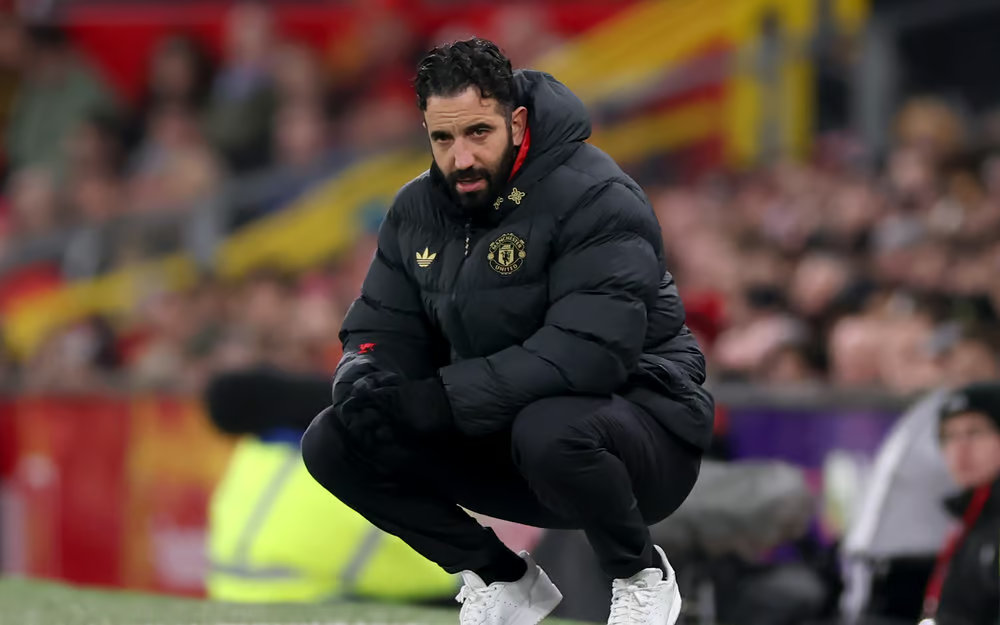
Ruben Amorim’s Manchester United tenure ended in a flurry of headlines and handshakes, a dramatic, 14‑month experiment that collapsed under the weight of inconsistent results, public rows and a power struggle that played out in full view of the footballing world.
His dismissal on 5 January 2026 closed a chapter that promised revolution but delivered turbulence, leaving United to pick up the pieces and rethink the blueprint for the club’s future.
The final act
The decision to part ways was made after a meeting with senior executives, including Chief Executive Omar Berrada and Director of Football Jason Wilcox, who informed Amorim that he was being relieved of his duties. His last outing, a 1–1 draw at Leeds, left United sixth in the table and crystallised the doubts that had been growing in the corridors of Old Trafford.
What began as a bold appointment from Sporting Lisbon ended with a terse exit, and a dressing room once full of promise now faces a period of uncertainty.
The sparks that ignited the split
Two moments lit the fuse. First, Amorim’s public rebuke of the club’s transfer policy — his insistence that he was the “manager, not the coach” and his blunt call for the hierarchy to “do their job” ; exposed raw nerves and a manager pushed to the edge.
Second, that confrontation laid bare a fractured relationship with Jason Wilcox, a rift sources say had been widening for weeks. Together, those flashpoints made reconciliation increasingly unlikely.
On the pitch: ideas that didn’t quite land
Amorim arrived with a reputation for tactical innovation, favouring a 3‑4‑2‑1 shape designed to press, overload and control. But at Old Trafford, the system produced flashes rather than consistency.
The team’s performances were patchy: moments of cohesion were followed by baffling lapses, home setbacks and dropped points against lower-ranked opponents. The board’s patience thinned as the club failed to develop the clear identity and sustained results they had been promised.
Off the field: cost, contracts and a reset
Reports suggest the hierarchy concluded a change was necessary to halt a slide and reset the dressing room.
Under the contract Amorim signed in November 2024, there is no reduced severance clause, meaning United will honour the remainder of his deal. It’s an expensive exit, but one the club judged essential to restore stability.
Interim coaching duties will fall to internal staff, with former midfielder Darren Fletcher the most likely to take on the next match at Old Trafford on Wednesday against Burnley. The search for a permanent successor begins, with a summer appointment the most likely.
Fallout, debate and what comes next
The sacking has ignited a wider debate about recruitment strategy, the balance of power between managers and sporting directors, and the risks of importing high‑profile coaches who struggle to adapt to the Premier League’s relentless pressure.
Critics argue Amorim’s methods clashed with the club’s expectations; his defenders say he was undermined by internal interference and unrealistic timelines.
Now, Manchester United face a delicate crossroads: steady the ship through January, decide between a long‑term visionary or a pragmatic short‑term fixer, and rebuild trust with supporters. For Amorim, it is a high‑profile setback — but one that will be studied by clubs weighing the gamble of bold appointments in elite football.































Comments
Sign in with Google to comment, reply, and like comments.
Continue with Google